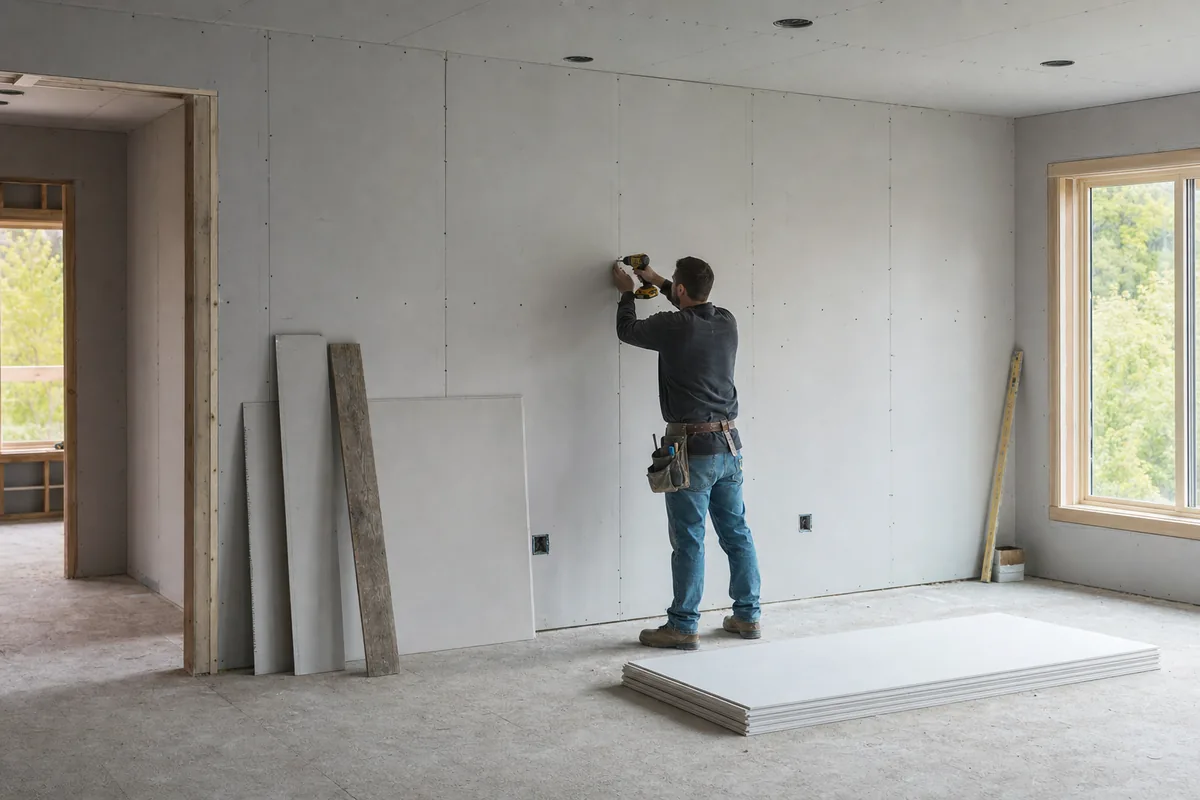
Johnson City Drywall hangs board on walls and ceilings across Johnson City and the Tri-Cities. Sheet layout, cut-outs for boxes and vents, ceilings first and then walls. Screws driven to a dimple that leaves the paper face intact, and seams staggered so no two joints stack in a line. Board goes up tight to the framing with the gaps at the floor where they belong, not at the ceiling line where a taper has to fill them.
We hang for homeowners, builders, remodelers and property managers, in new rooms, additions, basements, garages and gutted houses. Half-inch standard board covers most walls and ceilings. Five-eighths Type X goes on garage assemblies shared with living space and anywhere else code calls for it. Moisture-resistant board goes in bathrooms and below grade. Thousands of square feet of hung board go into knowing where a seam should land before the first sheet leaves the stack. Kingsport, Bristol, Elizabethton, Jonesborough, Gray, Erwin, Piney Flats and Boones Creek book on the same terms as Johnson City itself.
Why Board Should Not Sit in a Damp House Before It Goes Up
Gypsum board arrives on a truck and then waits, and where it waits matters more than most people expect. Think of a stack left flat on a slab in an open garage, or one standing against a wall in a house with no power and no heat. Both drink moisture out of the air the whole time they wait. Johnson City averages about 44 inches of rain a year over roughly 135 days with some precipitation, against a national figure closer to 38. A week of waiting in July is a week of taking on water.
Swollen board does not hang flat. The edges soften first, the paper face goes slack, and a sheet that measured true on the truck bows a little between the studs. Screws sink easier than they should through soft paper, which is how a fastener ends up buried past the face with nothing left holding the board. Then the house dries out through the first heated winter, everything shrinks back, and the wall shows you the story in popped fasteners and open joints.
The way around it is dull and it works. Board gets stored flat, off the slab, inside a space that is closed in and holding roughly the temperature it will hold once people live there. We check that the framing is dry before board covers it, because wet studs behind new board have nowhere to give that moisture up except into your wall. And fasteners get set by feel and depth rather than by clutch alone. Board that softened a little in the stack takes a screw differently than a sheet delivered that morning.
Hanging Work We Take On
Whole-Room and Whole-House Hanging
New rooms, additions and gutted houses, ceilings first and then walls, cut and fastened room by room to a planned layout.
Ceiling Hanging
Overhead board carries its own weight against the fasteners all day, so it takes tighter screw spacing and a lift or a second pair of hands. See Ceiling Drywall Installation.
Fire-Rated Board on Garage Assemblies
Five-eighths Type X on garage walls and ceilings shared with living space, hung with the fastening the assembly calls for. See Garage Drywall.
Moisture-Resistant Board Below Grade and in Baths
Green board in basements and bathrooms, which in this climate is worth the difference. See Basement Drywall.
Hanging Only, Somebody Else Finishing
Board up, screwed off and ready for another crew’s tape. Common on builder jobs and for homeowners taping it themselves.
Hanging as Step One of a Full Job
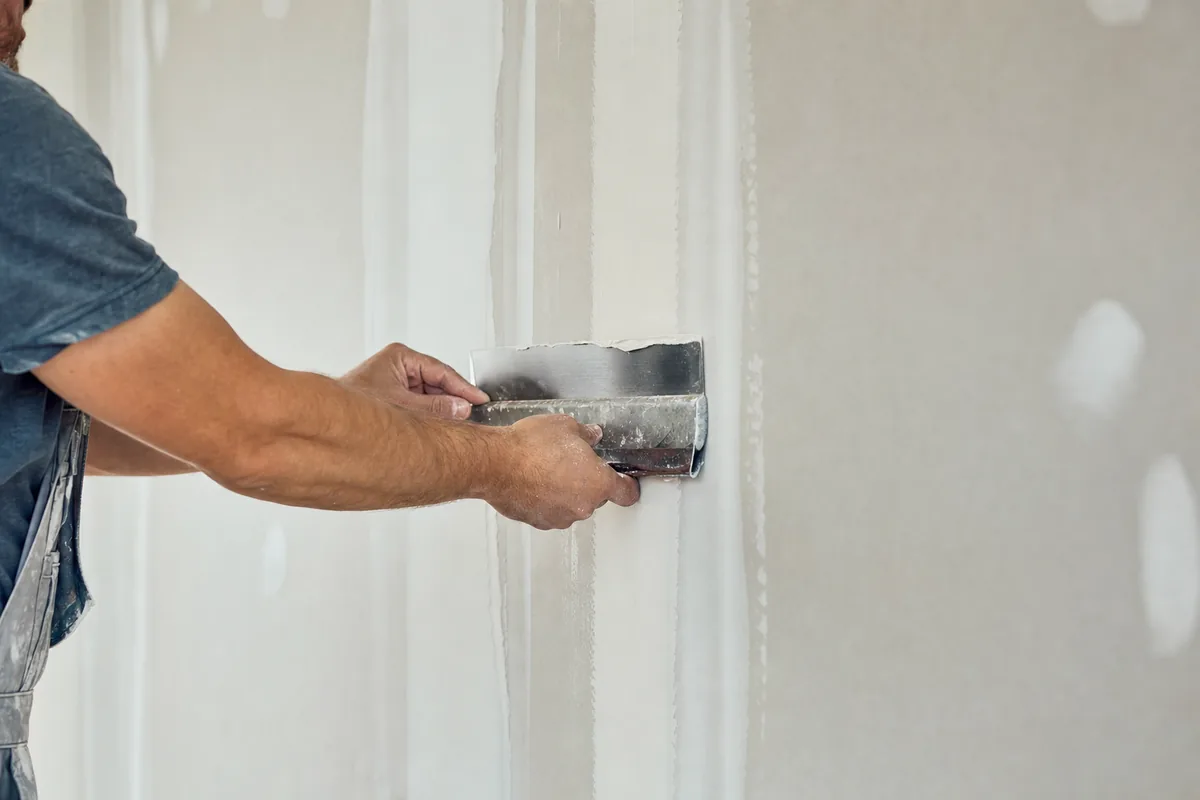
Hang, tape, coat, sand and texture as a single scope. See Drywall Installation.