
📞 (423) 820-3689
Licensed & Insured
Free On-Site Estimates
Many Years of Experience
Serving All 8 Tri-Cities Towns

Drywall Repair in Johnson City, TN

Johnson City Drywall patches holes, cracks, nail pops and water-damaged sections in walls and ceilings across Johnson City and the Tri-Cities. Every repair runs the same way: cut back to sound board, back the opening where it needs it, tape the seam, then three coats of joint compound feathered wide enough that the edge disappears, then sanding and a texture match. Small dings through to full ceiling sections.

Johnson City Drywall patches holes, cracks, nail pops and water-damaged sections in walls and ceilings across Johnson City and the Tri-Cities. Every repair runs the same way: cut back to sound board, back the opening where it needs it, tape the seam, then three coats of joint compound feathered wide enough that the edge disappears, then sanding and a texture match. Small dings through to full ceiling sections.

We work in houses, rental units and commercial spaces, and we size the fix to the damage rather than to the invoice. A screw hole takes minutes. A doorknob hole takes a backed patch. A soft, stained ceiling section takes new board. Many years of patching walls goes into knowing which one you are actually looking at, and into making the repair vanish under paint instead of showing as a flat spot in the wrong light.

Why Drywall Damage Happens in Johnson City

Johnson City takes about 44 inches of rain a year, spread over roughly 135 days. That is well above the national average, and it is the single biggest thing working against drywall in this area. Gypsum board is a paper-faced product with a mineral core, and it responds to moisture in the air whether or not anything has actually leaked. Through a humid Tri-Cities summer the board and the framing behind it take on moisture and swell slightly. Through a dry winter with the heat running they give it back and shrink. That cycle, repeated every year, is what pops fastener heads through the paint, opens hairline cracks along taped seams, and lifts corner bead at the angles.

Rainfall does the more obvious damage. Roof and gutter problems, failed window flashing, and supply lines in exterior walls all end in the same place. That place is a stained, soft patch of ceiling or wall, noticed weeks after the water started moving. Basements here run humid even when they are dry. That is why a basement repair usually calls for moisture-resistant board rather than the standard panel that came out.

None of that is a reason to panic about your walls. It is a reason to use the right board and enough dry time between coats. A patch rushed through a humid week is a patch you will be looking at again next year.

Drywall Repair Services

Nail Pop and Small Hole Repair

Doorknob holes, screw holes, picture hangers, small dents. See Small Hole and Patch Repair, or Nail Pop Repair for popped fasteners specifically.

Crack Repair

Settling cracks, seam cracks and corner cracks, including the ones that keep coming back. Full detail on the Drywall Crack Repair page.

Large Hole and Section Replacement

Damage past about a foot across, where the opening needs backing board screwed to the studs before anything gets patched over it.

Ceiling Drywall Repair

Sagging, stained or damaged ceiling sections, including the overhead texture match that makes or breaks the job.

Water Damage Drywall Repair

Putting the wall back together once the water problem itself is resolved and the cavity is dry. Extraction and mold remediation are separate licensed specialties and we refer those out. See Water Damage Drywall Repair.

Basement and Garage Repair

Moisture-resistant board in basements, fire-rated board on garage walls and ceilings shared with living space. See Basement Drywall and Garage Drywall.
Not sure what your wall actually needs?

Tell us what the damage looks like, or what needs hanging, and you get a real number and a real timeline before anything is cut.

Request a Quote

Which Repair Do You Actually Need?

Four different jobs get called “a hole in the wall,” and they cost very different amounts.

A screw or nail hole gets filled, sanded and spot-textured. Minutes of work, and the only real skill is not leaving a ring of compound around it.

A hole under about four inches needs a patch cut to fit and backed, either with mesh tape over the opening or a scrap of board slipped behind it and screwed off. Then two to three coats, feathered wide. Skipping the backing is how a repair ends up as a soft spot you can push in with a thumb six months later.

Anything past about a foot needs real backing board fastened to the studs, a cut patch panel, taped seams and a full three-coat finish. At that size it is closer to a small installation than a patch.

A crack is the one worth a second look before anyone patches it. Most are cosmetic: seasonal movement, or a taping seam that opened up. Three patterns are worth a closer look. A crack wider than about a quarter inch. One running diagonally from a door or window corner. One that has come back after being repaired twice. Any of those can point to movement in the structure. We are drywall contractors and not structural engineers. If we see one of those patterns we say so before we cover it, because patching over it just hides the evidence until it opens again.

How Much Does Drywall Repair Cost?

We price repairs by the job, not by the hole. Our minimum callout is $150, and that is the honest number: a patch needs a visit to cut and fill it and a second to finish it once the compound has dried, so nobody in this trade turns out for less.

  • Small patch, $150 to $250: one or two small holes or a room of nail pops, including the return visit to sand and texture
  • Standard repair, $250 to $450: several patches, a medium hole needing backing board, or a run of cracks
  • Large section or ceiling repair, $450 to $1,200: backing board, a cut patch panel and a full three-coat finish
  • Water damage repair, $400 to $1,200: once the leak is fixed and the cavity is dry
  • Single room hung and finished, $1,200 to $2,500: when a wall is past patching

Scope drives the number, and access drives it further, sometimes by half again. High ceilings, stairwells, tight corners behind fixed cabinets and anything needing scaffolding all add labor to the same square footage. Estimates are free and given on site, because nobody can price a stained ceiling accurately over the phone.

How Long Does a Repair Take?

  • Small, under 1 inch: 2 to 4 hours total, and most of that is dry time
  • Medium, 1 to 4 inches: about 2 hours of active work spread across 3 to 4 days
  • Large holes or sections: 5 to 7 days, with the work split into a few short visits

The gap between active work and total time is compound drying, and it is not negotiable. Joint compound needs 8 to 24 hours between each of the three coats, longer in a humid week. Drywall is never a one-visit job once you count that. Anyone who tells you they will hang, finish and texture a real patch in a single trip is either coming back or leaving you a patch that cracks.

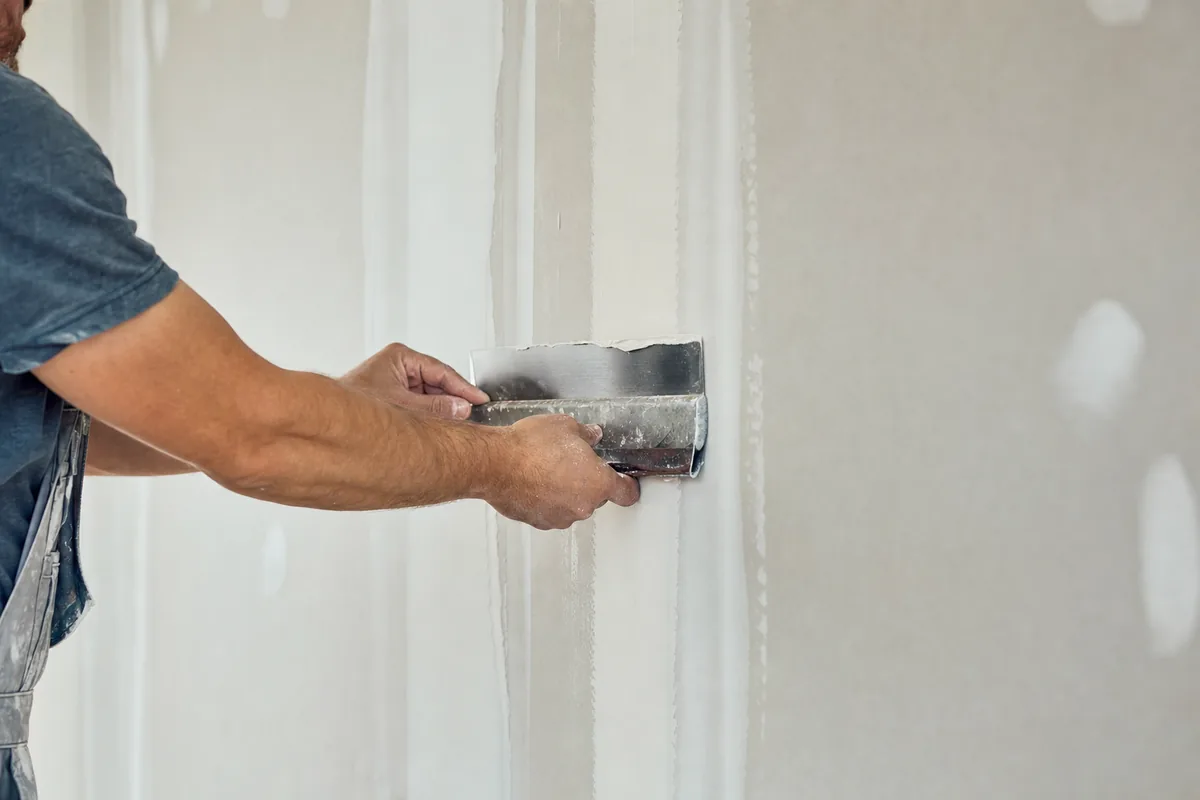
Running a taping knife along a drywall seam
One crew, one quote

Hanging, taping, finishing, sanding and the texture match run as one job on one schedule, rather than a hanger who leaves and a finisher who never turns up.

Floors get covered, the work area gets closed off and sanding is done with vacuum-assisted tools, so the only room that knows we were there is the one with the repair in it.

See all services

How a Repair Runs, Start to Finish

Four stages, roughly 3 to 7 days end to end, and you will know which one we are in.

Assessment and a Written Estimate

We look at the damaged board, find out what caused it, and say whether it is cosmetic or a symptom of something else. That includes checking for moisture around a stain rather than assuming the leak is old. Then you get the board type the job needs, standard gypsum, moisture-resistant or fire-rated, the price, and the number of visits, on site and in writing before anything gets cut.

Protecting the Room Before Anything Gets Cut

Drywall sanding makes fine dust that travels through a house and settles on everything, and it is the part of this work homeowners dread most. Floors get covered, the work area gets closed off, furniture gets moved or sheeted, and sanding is done with vacuum-assisted sanders rather than dry-sanded into the room. The goal is that the only room that knows we were there is the one with the repair in it.

The Repair and the Texture Match

Cut back to sound board, backing where the opening needs it, patch panel, joint tape, then three coats of compound each feathered wider than the last. Then sanding, with a pole sander on ceilings. Texture matching is the step that separates a repair you cannot find from one you can see from the doorway. Smooth, orange peel, knockdown and skip-trowel all get matched to what is already on your wall, not to whatever is easiest to spray.

Final Check and Cleanup

Once the compound is cured we look at the patch under different light, because a flat spot that is invisible at midday shows up under a lamp at night. Then the dust comes out, the covers come up, and we walk you through the finished repair. It leaves paint-ready unless you have asked us to prime it.

Why Choose Johnson City Drywall for Drywall Repair

  • Many Years of Experience: hundreds of jobs’ worth of walls, ceilings and textures, and a crew that has seen whatever is behind yours before.
  • Repairs You Cannot Find Afterward: feathered compound and a matched texture, so the patch disappears under paint instead of showing as a flat spot in raking light.
  • The Right Fix for the Damage: sized to what is actually wrong. A screw hole does not get sold a patch panel.
  • A Clean Job Site: contained work area, covered floors, vacuum sanding, and the dust gone when we are.
  • Straight Answers on Bigger Problems: if a crack pattern points past cosmetic, you hear it before we patch over it, not after.

Our callers are homeowners, landlords and property managers. Renovation contractors who need a drywall crew on a schedule. Buyers clearing a punch list before closing. Anyone putting a room back together after a leak has been dealt with.

What a Ceiling Repair Usually Looks Like

A slow supply-line leak above a bathroom ceiling softens the board long before anything drips. By the time it sags, the gypsum core has taken on water and will not dry back straight, so patching over it just moves the problem. The fix is to cut back to sound board past the stain on every side. Let the cavity dry and confirm it with a meter, then hang moisture-resistant board and match the texture. On a skip-trowel ceiling that last step is most of the job. Done properly the patch is invisible once it is painted, and it takes a few short visits rather than one, because the compound has to dry between coats.

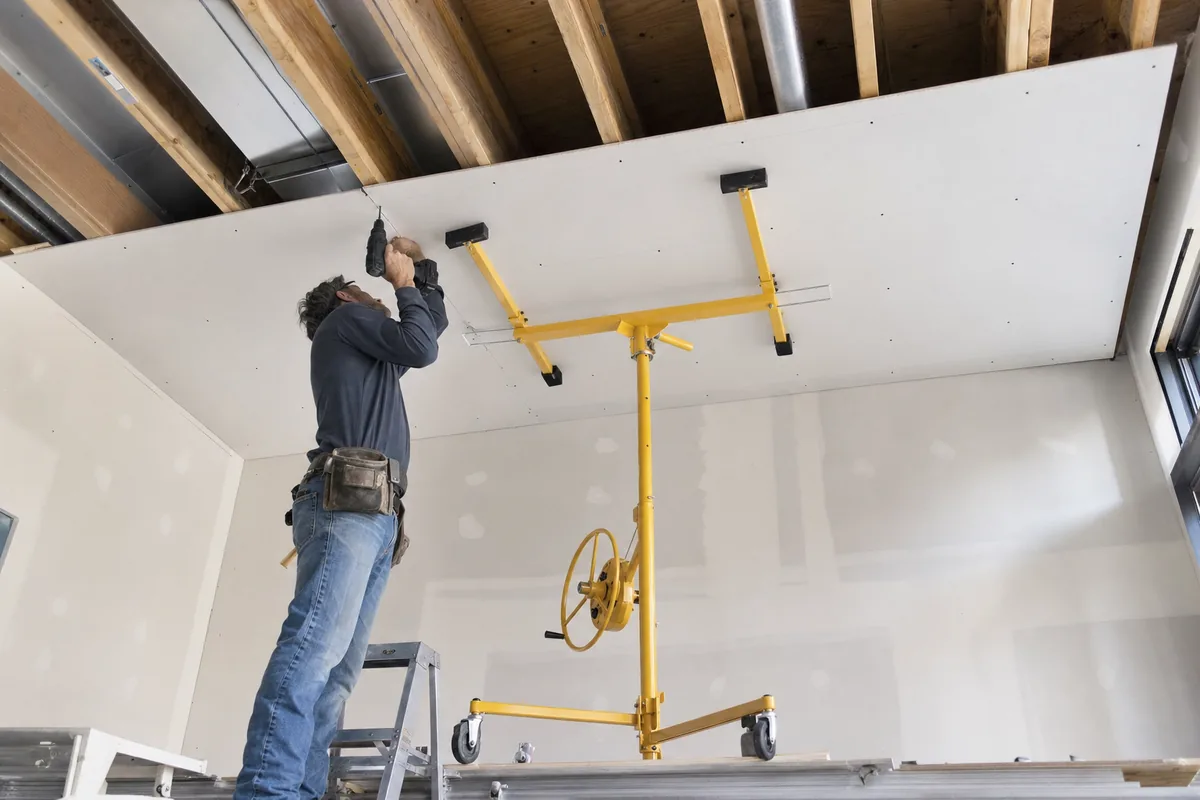
Drywall panel being fixed to ceiling joists with a panel lift
Built for how walls move here

Johnson City takes about 44 inches of rain a year. Board and framing swell through a humid summer and shrink through a dry heated winter, and that cycle is what pops fasteners and opens taped seams. The fix is the right board and enough dry time between coats.

Get a free estimate

Drywall Repair Across the Tri-Cities

Same pricing and the same crew in Kingsport, Bristol, Elizabethton, Jonesborough, Gray, Erwin, Piney Flats and Boones Creek as in Johnson City itself. No travel surcharge anywhere on that list. Full detail by town on the service areas page, and the rest of what we do on the Johnson City Drywall homepage.

Repair work in an office or a commercial space is on the Commercial Drywall page.

Get Your Repair Scheduled

Most repairs land between $150 and $450, and you will know the number before anything gets cut. Free estimates, a contained work area, and a patch you will not be able to find afterward. Call Johnson City Drywall and tell us what the damage looks like.

Drywall Repair in Johnson City, TN FAQs

How much does it cost to fix a hole in drywall?

A small patch runs $150 to $250, which is our minimum callout and covers the return visit to finish it. Several patches or a medium hole runs $250 to $450. Large sections and ceilings run $450 to $1,200.

Can you match my existing wall texture?

Yes. Smooth, orange peel, knockdown and skip-trowel all get matched. Texture matching is part of every repair rather than an extra. See [Drywall Finishing and Taping](/drywall-finishing-taping) for how finish levels work.

How long does a drywall crack repair take?

About 2 hours of actual work spread across 3 to 4 days, because compound needs 8 to 24 hours to dry between each of three coats.

Do you repair drywall after water damage?

Yes, once the leak is fixed and the cavity is dry. Water extraction and mold remediation are separate licensed specialties and we refer those out.

Is it cheaper to repair or replace a section?

Small and medium damage is almost always cheaper to repair. Very large or repeatedly damaged areas are often cheaper to replace outright, and you get told which yours is.

Do you repair ceilings as well as walls?

Yes. Same process, more setup, and the texture match matters more overhead because ceilings catch light across the surface.

Get a Free Estimate

Tell us what the damage looks like, or what needs hanging. We come out, look at the wall, and give you a price and a timeline you can hold us to. Repairs start at $150.

Call Now Free Quote