
📞 (423) 820-3689
Licensed & Insured
Free On-Site Estimates
Many Years of Experience
Serving All 8 Tri-Cities Towns

Drywall Patch Repair in Johnson City, TN

Johnson City Drywall patches small holes in walls and ceilings across Johnson City and the Tri-Cities. Doorknob strikes, anchor and screw holes, dents from furniture, TV mount brackets pulled out of hollow board, and the ragged opening a plumber left behind an access panel. Every patch runs the same sequence. Square the opening up, put backing behind it, set a patch cut to fit, then tape the edges. Two or three coats of compound follow, feathered well past the hole, then sanding and a texture match.

Johnson City Drywall patches small holes in walls and ceilings across Johnson City and the Tri-Cities. Doorknob strikes, anchor and screw holes, dents from furniture, TV mount brackets pulled out of hollow board, and the ragged opening a plumber left behind an access panel. Every patch runs the same sequence. Square the opening up, put backing behind it, set a patch cut to fit, then tape the edges. Two or three coats of compound follow, feathered well past the hole, then sanding and a texture match.

We patch in houses, rental units, offices and finished basements. Standard gypsum board takes a standard patch. Moisture-resistant board in a bath or a basement gets patched with the same board that came out and given longer between coats. Many years of small repairs across this valley go into sizing the fix to the damage instead of to the invoice. A screw hole and a doorknob hole are not the same job, even though both are smaller than your hand. Kingsport, Bristol, Elizabethton, Jonesborough, Gray, Erwin, Piney Flats and Boones Creek book on the same terms as Johnson City itself.

Why a Rushed Patch Comes Back in Johnson City

The most common thing we get called out to fix is somebody else’s patch, and usually it did not fail because the person was careless. It failed because it was finished in one afternoon. Compound has to give up its water before the next coat traps it, and around here the air is often unwilling to take that water. Johnson City averages about 44 inches of rain a year over roughly 135 days with some precipitation, against a national figure nearer 38 inches. A humid August week can double the drying time a bucket label promises.

A patch closed up too fast keeps shrinking behind the paint. Months later you get a faint square outline in the right light, a hairline ring around the edge of the repair, or a spot sunk just enough to catch a shadow. Seasonal movement then finishes the job. Board and framing swell through the summer and shrink through a dry heated winter, and the weakest place on that wall is the repair that never fully cured.

Two habits prevent all of it, and neither is clever. Back the opening with something solid so the patch is not floating on tape alone, and give every coat the full 8 to 24 hours before the next one goes on. Both together are why a small patch gets quoted as two or three short visits instead of one. A patch you cannot find a year later is worth more than a patch finished before lunch.

Small Repairs We Take On

Doorknob Holes

The classic hole in a wall, made by a door swung hard with no stop behind it. Round holes get backed and patched, and we will point out where a stop or a wall shield belongs.

Screw, Anchor and Bracket Holes

Holes left in the wall by shelving, mirrors, curtain rods and TV mounts. Small ones get filled and spot-textured, and blown-out anchor holes get backing before anything else.

Dents, Gouges and Scrapes

Furniture corners, moving day, a vacuum cleaner against a corner bead. Filled, sanded and blended into the surrounding surface.

Access Panels and Trade Cut-Outs

Openings left by a plumber or an electrician working behind the wall, squared up, backed and closed properly.

Patches Beside Popped Fasteners

A hole in a room that also has domes down a stud line gets quoted and scheduled as one job, not as two separate callouts. See Nail Pop Repair.

Patches Beside Cracks

Small holes turning up alongside open seams point to one repair visit, not two. See Drywall Crack Repair.
Not sure what your wall actually needs?

Tell us what the damage looks like, or what needs hanging, and you get a real number and a real timeline before anything is cut.

Request a Quote

Which Small Hole Repair Do You Actually Need?

Four jobs get described as “a small hole in the wall” over the phone, and they take different amounts of work.

A screw or anchor hole gets filled, sanded and spot-textured. The only real skill is leaving no ring of compound around it, since a proud halo shows under paint as clearly as the hole did.

A hole under about four inches needs the opening squared and backed. Either mesh tape bridges it or a strip of board goes in behind and gets screwed off. Then two or three coats, each wider than the last. Skipping the backing is exactly how a repair becomes a soft spot you can push in with a thumb six months later.

A doorknob hole through hollow wall is the same job with one extra consideration. It will happen again in the same spot unless something stops the door, so the patch is worth pairing with a stop or a wall shield.

Anything past about a foot across stops being a patch. Backing board gets fastened to the studs, a cut panel goes in, and the seams get taped and finished like new work. At that size the job belongs with the Drywall Repair range instead.

How Much Does Small Hole & Patch Repair Cost?

Patches are priced by the visit, never by the hole, and the minimum callout is $150. That floor is honest about the shape of the work: one trip to cut, back and coat, and a second to sand and finish the repair once the compound has dried through.

  • $150 to $250: one or two small holes, or a handful of anchor holes in a single room, with the return visit included
  • $250 to $450: several patches, a medium hole needing backing board, or patches sharing a visit with cracks and popped fastener repair
  • $450 to $1,200: a large opening needing backing and a cut panel, or ceiling work off staging

Access moves the number more than hole count does. High ceilings, stairwells, a patch behind a fixed cabinet or above a stair turn all add labor to what is otherwise a small repair. Estimates are free and given on site, because a photograph flattens the one thing that matters most, which is the texture around the hole.

Do I Need a Professional for a Small Drywall Patch?

Honestly, not always, and we would rather say so than sell you a callout.

A single anchor hole under an inch is a reasonable weekend job. Lightweight filler, a flexible knife, patience while it dries, a light sand and a dab of matching paint. Where it goes wrong for most people is texture, not filling. Orange peel, knockdown and skip-trowel all have a spray pattern and a knockdown timing. A smooth thumbprint of filler in the middle of a textured wall is more visible than the damage was.

Call somebody when the hole is bigger than a golf ball, when it needs backing, when it sits on a ceiling, or when there are enough of them to be a job. A textured wall is worth a call on its own. And if it is a single small hole in a smooth wall, the money is better spent on a tub of compound than on our minimum callout.

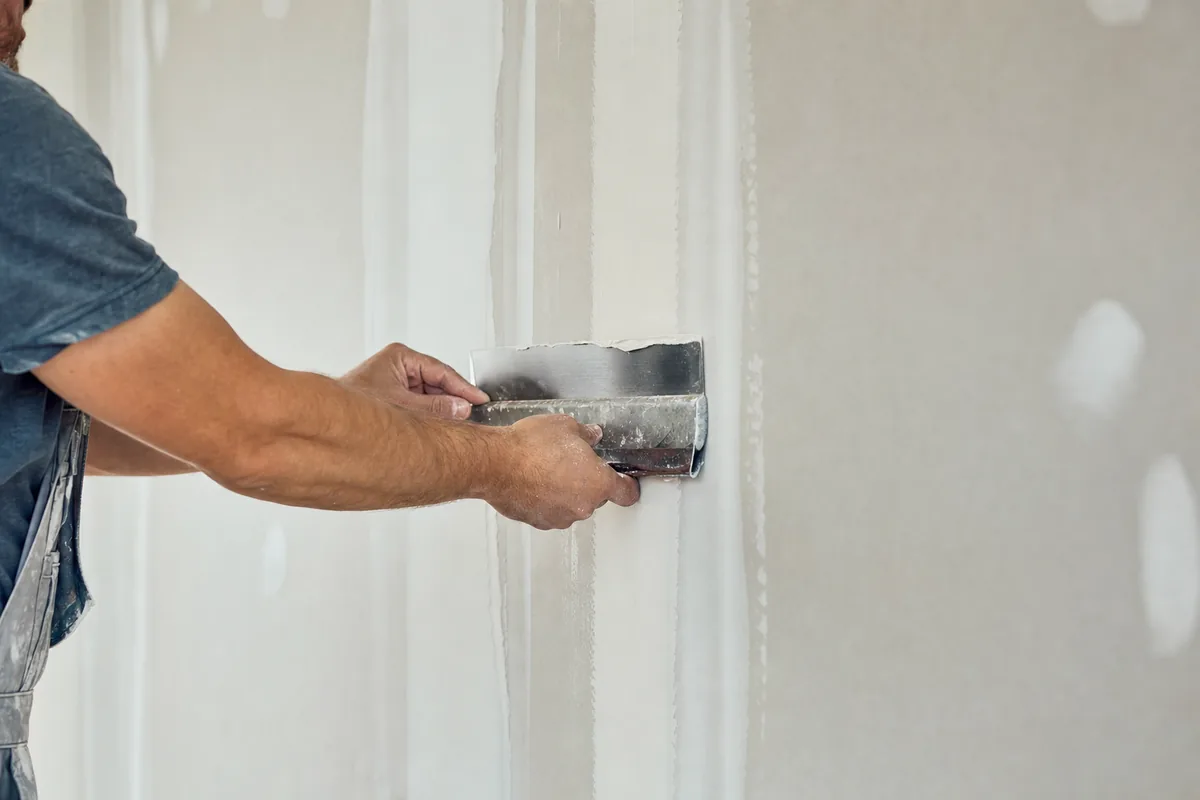
Running a taping knife along a drywall seam
One crew, one quote

Hanging, taping, finishing, sanding and the texture match run as one job on one schedule, rather than a hanger who leaves and a finisher who never turns up.

Floors get covered, the work area gets closed off and sanding is done with vacuum-assisted tools, so the only room that knows we were there is the one with the repair in it.

See all services

How Long Does a Small Patch Take?

  • Under an inch: 2 to 4 hours of elapsed time, and almost all of that is drying
  • One to four inches: about 2 hours of active work spread across 3 to 4 days
  • Four inches and up: 5 to 7 days elapsed, with 3 to 5 hours of hands-on work

The difference between those two columns is compound curing, and it does not compress. Each of the three coats wants 8 to 24 hours before the next, and a humid week pushes that to the long end. Drywall is never a one-visit job once dry time is counted, and that holds for a patch the size of a coin. Anyone offering to cut, back, coat, sand and texture a real patch in a single trip is either coming back or leaving you a repair that outlines itself by spring.

How a Patch Repair Runs, Start to Finish

Four stages across two or three short visits, all of them scheduled on the estimate.

Sizing the Damage and Writing the Estimate

We look at what is behind the hole before deciding how to close it, because a cavity with a pipe or a wire in it changes the method. The texture gets identified at the same time, since matching knockdown and matching orange peel are different amounts of work. Then the count, the visit schedule and the price go in writing on site.

Keeping a Two-Hour Job From Becoming a House-Wide Clean-Up

The dust from one small patch is not much, and it still travels if nothing stops it. A drop cloth goes under the work, the doorway to the rest of the house gets closed, nearby furniture gets pulled back or covered, and sanding runs through a vacuum sander held tight to the wall. A patch in the hallway should not put grit on the coffee table.

Backing, Patching and Feathering

The opening gets squared so the patch has straight edges to sit against. Backing goes in behind it, screwed to something solid, then the patch itself, then tape around the joint. Three coats follow, each feathered wider than the last, so the repair blends out over a foot or more instead of stopping at the edge of the hole.

Texture Match and the Light Check

Texture gets sprayed or troweled to match what is already on the wall, then knocked down at the same timing the rest of the surface was. Once cured we look across the repair with a lamp held low, because a shallow dish reads as a shadow at night and vanishes at midday. Dust comes out, covers come up, and the wall is left paint-ready.

Drywall Patch Repair for Landlords and Property Managers

  • Whole Units in One Visit: every hole in a turnover unit counted, priced and closed as one job instead of a callout per room.
  • Priced by the Visit: a bedroom of anchor holes sits inside the $150 to $250 tier rather than being charged per hole.
  • Texture Matched to the Existing Wall: no patchwork of flat spots for the next tenant to notice on the walkthrough.
  • Licensed and Insured: coverage confirmed before anyone works in an occupied building.
  • Scheduled Around Tenants: short visits either side of the dry time, which is easier to fit around a move-out date than a full day of noise.

Our callers are homeowners with a door that met a wall. Landlords and property managers turning units over. Buyers and sellers clearing a punch list before closing. Renters who would rather pay for a proper patch than lose a deposit over one.

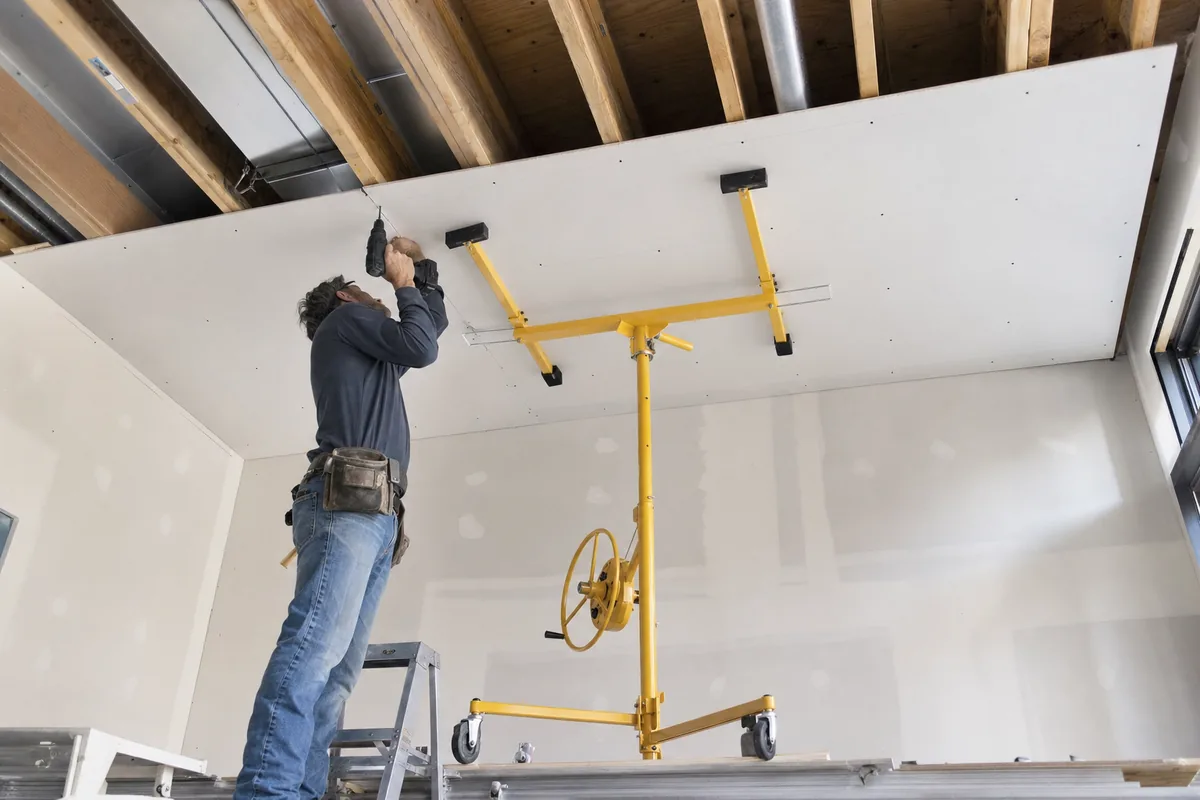
Drywall panel being fixed to ceiling joists with a panel lift
Built for how walls move here

Johnson City takes about 44 inches of rain a year. Board and framing swell through a humid summer and shrink through a dry heated winter, and that cycle is what pops fasteners and opens taped seams. The fix is the right board and enough dry time between coats.

Get a free estimate

What a Doorknob Hole Repair Usually Looks Like

A bedroom wall has taken the same door against the same spot for years, and the knob has finally gone through the board. The hole is round, about two inches across, with the paper crushed inward all the way round it. Squaring it up takes the damage back to firm board. A strip of scrap board goes in behind as backing, screwed off through the face, then a cut patch sits in the opening and gets taped at the edges. First coat that morning, second coat two days later with a sand, then texture and a light check on a third short call. Roughly two hours of work spread over three or four days, and a doorstop suggested before we leave so the next one never happens.

Drywall Patch Repair Near You in the Tri-Cities

Same crew and identical pricing in Gray, Boones Creek, Kingsport, Bristol, Elizabethton, Jonesborough, Erwin and Piney Flats as in Johnson City itself, with no travel surcharge on that list. Town by town detail is on the service areas page and everything else we do is on the Johnson City Drywall homepage. Patch work in an office or a retail unit belongs on the Commercial Drywall page.

Get Your Small Repairs Patched Properly

One or two holes land between $150 and $250, and the number goes on a written estimate before anything gets cut. Free estimates, a covered work area, two short visits either side of the dry time, and a patch nobody can pick out of the wall afterward. Call Johnson City Drywall and tell us how many holes there are and what the wall texture looks like.

Drywall Patch Repair in Johnson City, TN FAQs

How much does it cost to fix a small hole in drywall?

One or two small holes sit inside the $150 minimum callout and land at $150 to $250, including the return visit to finish them. Several patches or a medium hole needing backing run $250 to $450.

Can you match texture on a small patch so it disappears?

Yes. Smooth, orange peel, knockdown and skip-trowel all get matched, and texture matching is part of every patch rather than an add-on. See [Drywall Finishing and Taping](/drywall-finishing-taping) for how finish levels work.

How fast can a small hole be fixed?

Active work on a small patch is about two hours. Elapsed time is 3 to 4 days on anything past an inch, because each coat needs 8 to 24 hours to dry before the next one goes on.

Do you have a minimum charge for one small hole?

Yes, $150. A patch takes at least two trips to do properly, so that number is what a callout actually costs rather than a padded figure.

Will the patch show through the paint later?

Not if it was backed, feathered wide and given its dry time. Repairs that outline themselves months later were almost always closed up before the compound finished shrinking.

Do you fix holes in ceilings as well as walls?

Yes, and overhead patches take more setup and pole sanding. The texture match matters more up there because a ceiling catches light across its whole surface.

Get a Free Estimate

Tell us what the damage looks like, or what needs hanging. We come out, look at the wall, and give you a price and a timeline you can hold us to. Repairs start at $150.

Call Now Free Quote