
📞 (423) 820-3689
Licensed & Insured
Free On-Site Estimates
Many Years of Experience
Serving All 8 Tri-Cities Towns

Water Damage Drywall Repair in Johnson City, TN

Johnson City Drywall replaces water-damaged walls and ceilings across Johnson City and the Tri-Cities. Stained lids under a roof leak, soft board behind a failed window, swollen bases where a supply line let go. Also the brown ring that came back a second time in the same spot. Every job runs the same sequence. Confirm the source is fixed, then meter the cavity until it reads dry. Cut back to sound board on every side, back the opening and set new board, then tape, three coats, sanding and a texture match.

Johnson City Drywall replaces water-damaged walls and ceilings across Johnson City and the Tri-Cities. Stained lids under a roof leak, soft board behind a failed window, swollen bases where a supply line let go. Also the brown ring that came back a second time in the same spot. Every job runs the same sequence. Confirm the source is fixed, then meter the cavity until it reads dry. Cut back to sound board on every side, back the opening and set new board, then tape, three coats, sanding and a texture match.

We work in houses, rental units, offices and finished basements. Standard gypsum goes back where the room is dry in normal use. Moisture-resistant board goes back in bathrooms, laundry rooms and below grade, which in this climate is money well spent. Many years of opening up wet walls goes into knowing how far past a stain the damage actually runs, because the visible mark is almost never the edge of it. Kingsport, Bristol, Elizabethton, Jonesborough, Gray, Erwin, Piney Flats and Boones Creek book on the same terms as Johnson City itself.

Why Rainfall Puts So Much Water Inside Johnson City Walls

Almost every soaked wall we open started outside the house. Roof valleys, a blocked gutter, a length of failed step flashing, a window head with no drip cap, a downspout emptying against a foundation wall. Johnson City takes about 44 inches of rain in an average year, spread over roughly 135 days with some precipitation, against a national figure nearer 38 inches. That second number is the one that matters most here.

Rain falling on 135 separate days is not the same as the same total arriving in a few storms. A defect that only leaks in wind-driven rain gets tested every week or two, all year. And a wall that took water on Tuesday rarely gets a long dry stretch to recover in before the next round comes through. Small failures that would stay harmless in a drier state get hundreds of chances a year to move water into a cavity here.

What that does to gypsum is not subtle. The mineral core swells and loses its bond to the paper facing, so the board goes soft, loses strength and will not dry back straight. A ceiling panel starts to sag under its own weight. Paint bubbles where moisture pushes it off the face. Meanwhile the stain you can see stops well short of where the water actually traveled, because water runs along framing and follows the top plate before it drops.

Metering the cavity before new board goes in follows from all of that. A wall that feels dry to a hand can still hold enough moisture to spoil new work. Closing it up traps a problem that comes back as a smell first and a stain second.

Water Damage Work We Take On

Ceiling Sections Under a Roof or Plumbing Leak

Stained, sagging or soft lids cut back to sound board, backed, re-boarded and re-textured.

Exterior Wall Sections

Board behind a failed window, door head or piece of flashing, replaced once the building envelope has been put right by whoever fixed it.

Bathroom, Laundry and Kitchen Walls

Wet areas rebuilt in moisture-resistant board, which handles humid air far better than the paper-faced standard panel that came out.

Basement Walls Below Grade

Below-grade board replaced where the source has been resolved and the room is dry. See Basement Drywall.

Stains, Rings and Bubbled Paint Without Softness

Sometimes the board is sound and only the surface has failed. See Drywall Repair for the smaller version of this work.

Cracks and Popped Fasteners Around a Wet Area

Movement around a soaked wall section shows up in the board nearby. See Drywall Crack Repair.

What We Handle and What We Refer Out

What we handle. Cutting out water-damaged board, checking what sits behind it, setting the right replacement panel, taping, coating, sanding and matching texture so the repair disappears into the wall.

What we refer out. Active leaks, water extraction, structural drying and mold remediation are separate licensed specialties. If water is still coming in, if there is standing water, or if there is visible mold, that gets handled first by the right trade. We will not board over an active leak, and a crew that offers to is selling you a second repair. Roofers, plumbers and remediation companies do that part properly, and we come in behind them.
Not sure what your wall actually needs?

Tell us what the damage looks like, or what needs hanging, and you get a real number and a real timeline before anything is cut.

Request a Quote

Which Water-Damaged Board Actually Has to Come Out?

Four situations get called water damage, and only two of them mean the board is finished.

A dry stain with sound board behind it is the best case. The core is intact, nothing gives under pressure, and the meter reads normal. Sealing the stain and repainting is often the whole answer, and cutting the wall open would be work you did not need.

Soft board that dents under a thumb is done. The core has swollen and the paper has lost its grip on it, and no amount of drying brings the strength back. That board comes out past the stain on every side.

A sagging ceiling panel is both a finish problem and a weight problem. Wet gypsum overhead is heavy and is pulling on fasteners the whole time, so it gets removed rather than propped or screwed back up.

Visible mold or a musty smell with no obvious stain stops being our call. Remediation comes first, we come second, and anything else buries the problem behind new board. Same for insulation that got wet, which holds water long after the framing has dried and needs to come out with the board.

What Water Damage Drywall Repair Costs in Johnson City

Prices below assume the source is fixed and the cavity has been dried, since extraction and remediation are somebody else’s scope and somebody else’s invoice.

  • $400 to $1,200 for typical water damage work: a ceiling section, a wall run below a window, or a bathroom wall taken back to sound board and rebuilt
  • $150 to $250 for a small isolated patch, which is also our minimum callout
  • $250 to $450 where several small areas need opening up across a room
  • $450 to $1,200 where a large section or a full ceiling needs backing, a cut panel and a complete three-coat finish

What moves the number is how far the damage runs past the stain, whether insulation or framing needs attention, and access. Ceilings, stairwells and anything worked off staging all cost more than the same square footage at chest height. Estimates are free and given on site, because nobody can price a stained ceiling honestly over the phone.

Emergency and Fast-Response Water Damage Drywall Repair

Water damage is the one repair people call about the same day they notice it, so here is what fast actually means on our side.

We answer the phone and we will get out to look. A wet ceiling that is sagging gets triaged ahead of a cosmetic stain, because a saturated lid is a weight hanging over a room. If the leak is still live, the fastest thing we can do for you is tell you who to call first and what to have ready when we arrive.

What we will not promise is a finished repair the same day. New board needs tape and three coats at 8 to 24 hours apart, and it needs a cavity that meters dry before it goes in. A crew that closes a wet wall on day one is giving you a repair that stains through by Christmas. Drywall is never a one-visit job, and a wet one least of all.

How Long Does Water Damage Repair Take?

  • Drying the cavity first: anywhere from a couple of days to a week or more, depending on how long the leak ran and who is doing the drying
  • A small isolated patch: 2 to 4 hours of elapsed time once the area is dry
  • A wall or ceiling section: about 3 to 4 days, with roughly 2 hours of active work
  • A large section or a full ceiling: 5 to 7 days elapsed, 3 to 5 hours of work across a few short visits

Drying the wall cavity is the one stage nobody shortens by wanting it shorter. After that, the same three-coat calendar applies as any other repair, with the long end of the 8 to 24 hour window in a wet week.

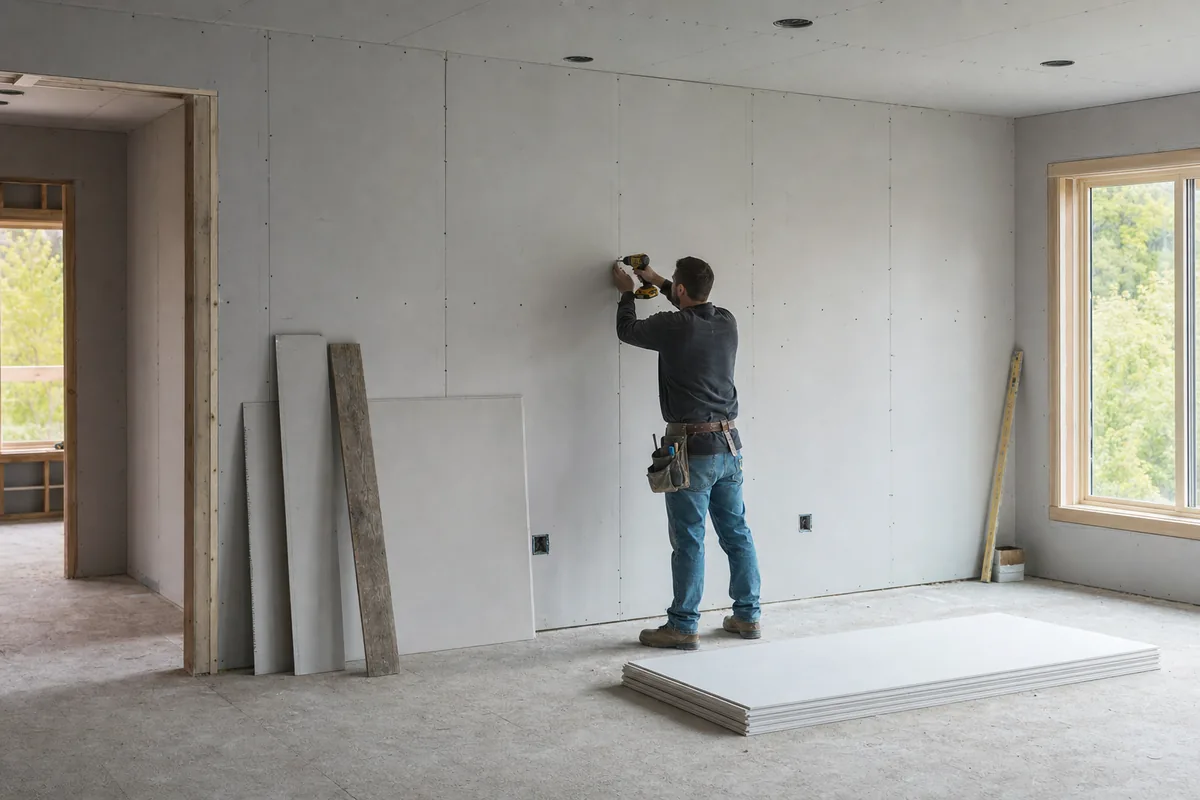
Drywall hung and ready for taping in a new room
One crew, one quote

Hanging, taping, finishing, sanding and the texture match run as one job on one schedule, rather than a hanger who leaves and a finisher who never turns up.

Floors get covered, the work area gets closed off and sanding is done with vacuum-assisted tools, so the only room that knows we were there is the one with the repair in it.

See all services

How a Water Damage Repair Runs, Start to Finish

Four stages across a few short visits, and the moisture reading decides when the board goes in.

Moisture Check and a Written Estimate

We meter the board and the framing around the damage rather than trusting how it looks, and we ask what has already been done about the source. If the reading is still high, you get a date to call us back instead of a crew that starts anyway. Then the scope, the board type and the price go in writing on site.

Sealing Off the Room and Lifting What Can Be Saved

Cutting out wet board drops damp gypsum and old insulation onto whatever is underneath, and that mess is heavier and dirtier than sanding dust. Furniture comes out or goes under plastic, floors get covered and taped at the edges, the doorway gets closed off, and registers get sealed so nothing travels through the ductwork. Debris leaves in bags rather than being swept toward a doorway.

Cutting Back and Setting New Board

Board comes out past the stain on every side until the edge is dry and firm. What is behind gets a look: wet insulation comes out, framing gets checked and left open if it needs more drying time. Backing goes in at the edges of the opening, new board gets cut to fit, and moisture-resistant panel goes back wherever the room justifies it. Then tape, and three coats each feathered wider than the last.

Texture Match and a Second Look at the Repair

The texture gets matched to the surrounding surface, which on a sprayed ceiling is most of the skill in the job. Once cured, the repair gets read under a lamp held at a low angle and checked once more for any shadow of the old stain bleeding through. Stain-blocking primer goes on if there is any doubt, and the surface is left ready for paint.

Why Choose Johnson City Drywall for Water Damage Drywall Repair

  • A Meter, Not a Guess: the cavity gets measured before new board goes in, so the repair is not sealing moisture into your wall.
  • Straight Answers About Scope: if it needs a roofer, a plumber or a remediation company first, you hear that on the estimate visit.
  • The Right Board Back In: moisture-resistant panel where the room justifies it, standard gypsum where it does not.
  • Licensed and Insured: coverage confirmed before any work starts, and a written estimate you can hand to an adjuster.
  • Texture Matched Overhead: sprayed and knocked-down ceilings matched to what is already there, which is the hardest half of this work.

Our callers are homeowners who found a stain after a storm. Landlords and property managers dealing with a unit after a supply line failed. Property owners waiting on a remediation crew to finish. Buyers who want a repaired ceiling looked at before closing.

What a Wind-Driven Rain Repair Usually Looks Like

A bedroom wall shows a dark patch below the window, wider at the bottom than the top, and the paint has lifted along the baseboard. A window with no drip cap has been letting water in during storms out of one direction for a couple of seasons. The homeowner gets the flashing corrected first. We come in a week later, meter the framing, and find the damage running about eight inches wider than the stain on both sides. Board comes out from the sill to the floor, wet insulation comes out with it, and the cavity gets another two days open before anything closes. New board goes in, then three coats over four days, then texture and a light check. The wall reads flat again, and this time the water has nowhere to come back in from.

Water Damage Drywall Repair Near You in the Tri-Cities

Same crew and identical pricing in Piney Flats, Elizabethton, Kingsport, Bristol, Jonesborough, Gray, Erwin and Boones Creek as in Johnson City itself, with no travel surcharge on that list. Town by town detail is on the service areas page and the rest of the trade is on the Johnson City Drywall homepage. Water-damaged walls in an office or a retail unit belong on the Commercial Drywall page.

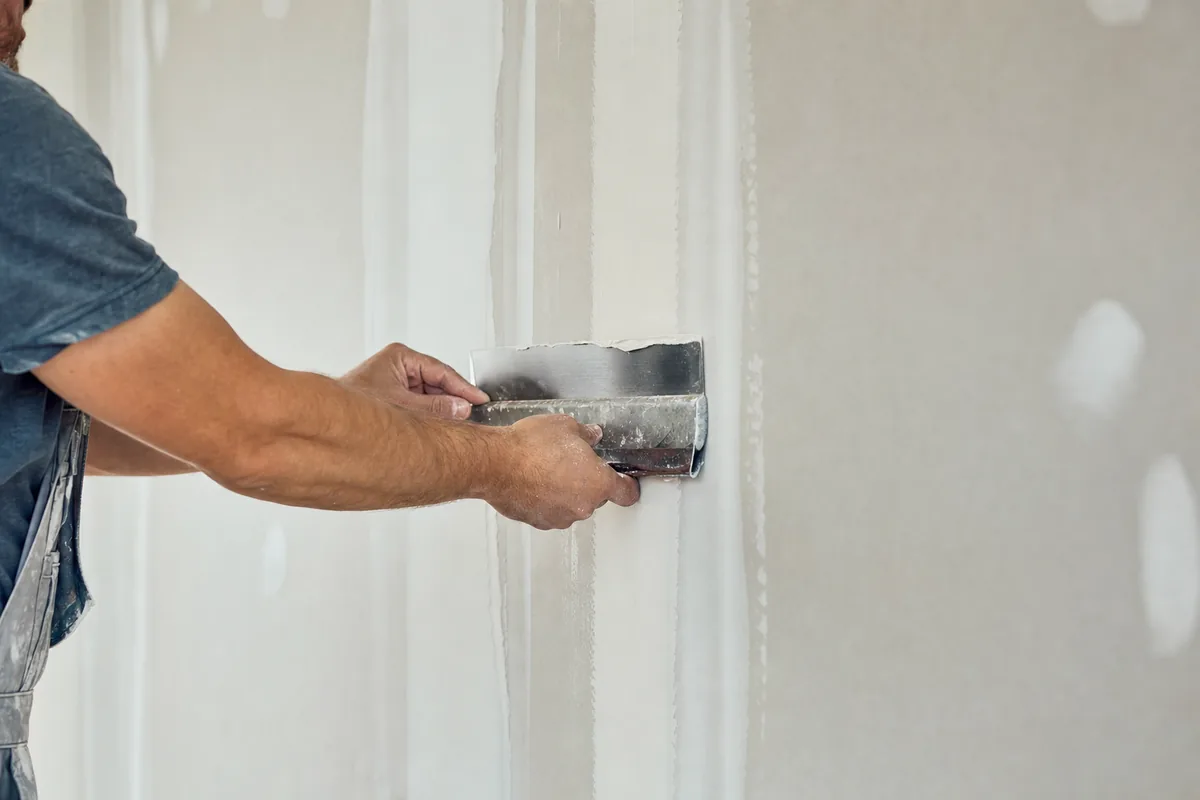
Running a taping knife along a drywall seam
Built for how walls move here

Johnson City takes about 44 inches of rain a year. Board and framing swell through a humid summer and shrink through a dry heated winter, and that cycle is what pops fasteners and opens taped seams. The fix is the right board and enough dry time between coats.

Get a free estimate

Get Your Water-Damaged Walls Put Right

Most water damage work lands between $400 and $1,200 once the cavity is dry, and the number goes on a written estimate before anything is cut. Free estimates, a metered cavity, a sealed-off work area, and a repair that stays invisible instead of ghosting back through the paint. Call Johnson City Drywall and tell us where the stain is and what has been done about the source.

Water Damage Drywall Repair in Johnson City, TN FAQs

How much does water damage drywall repair cost in Johnson City?

Typical work runs $400 to $1,200 once the leak is fixed and the cavity is dry. A small isolated patch sits inside the $150 minimum callout at $150 to $250, and a large section or full ceiling runs $450 to $1,200.

Do you remove mold or just repair the drywall?

We repair the board. Mold remediation is a separate licensed specialty and it goes first, because new board over a contaminated cavity hides the problem instead of solving it.

Can you repair drywall while the wall is still wet?

No. The source has to be resolved and the cavity has to meter dry first. Closing a wet wall is how a stain comes back through fresh paint a few months later.

Will insurance cover water damage drywall repair?

Coverage depends on your policy and on what caused the loss. We can give you a written, itemized estimate to submit with a claim, though the coverage decision sits between you and your insurer.

How can I tell if the drywall is damaged or just stained?

Press it. Board that gives, dents or feels spongy has lost its core strength and needs replacing. A firm, dry stain with no softness is often just a paint and primer job.

Do you replace wet insulation behind the wall?

Wet insulation comes out with the board, because it holds water long after framing has dried. Replacing it is part of the scope and it goes on the estimate.

Get a Free Estimate

Tell us what the damage looks like, or what needs hanging. We come out, look at the wall, and give you a price and a timeline you can hold us to. Repairs start at $150.

Call Now Free Quote